

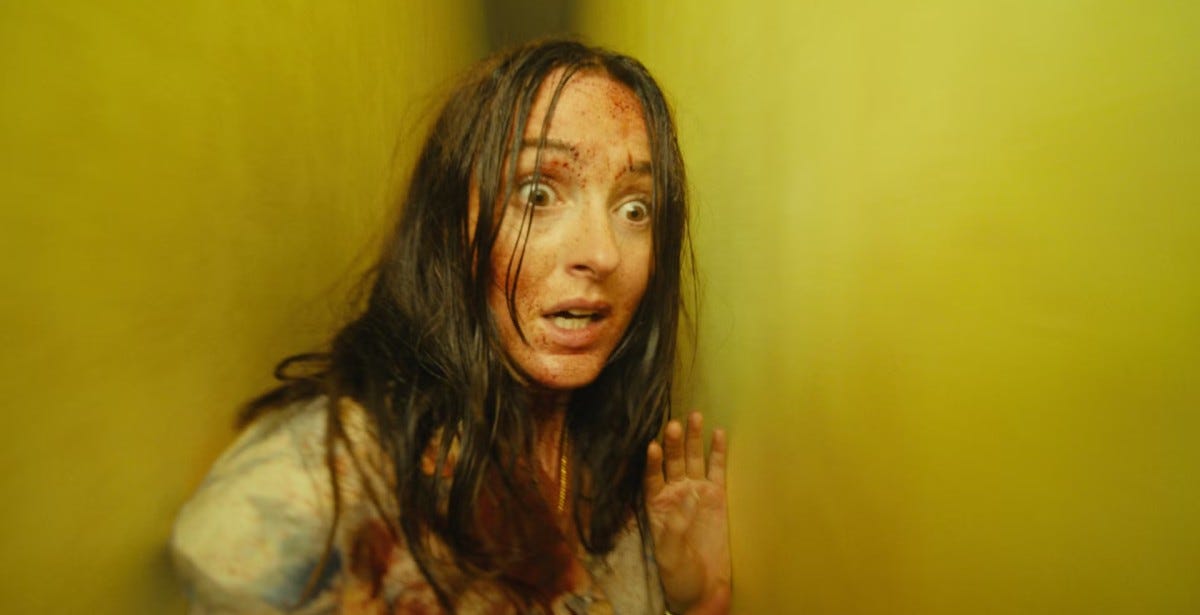
What was once a blurry image of an empty office room posted onto 4chan has now become a feature film released in Hollywood’s biggest season, summertime. Backrooms is a viral creepypasta-turned-film that is directed by Kane Parsons. In his directorial debut, the 20-year-old sought out to deliver liminal horror in an artistic way where only a film under A24 can.
The film immediately sets its tone with its found footage opening where we get to see the vast empty spaces while trying to map out exactly what’s going on. Here is where we begin to hear, and see, the dread that awaits our main character, Clark. Clark is a furniture store owner that is entirely down on his luck. So much so that he regularly sees Dr. Mary Kline to work through his struggles and help him find a way out of his self-made prison. As she is coaching him through these problems she points out repeating patterns in Clark, which sends him into a rage-induced hunt to prove a point – and his furniture store presents just that.
Late one night, after the power in his store trips, Clark discovers a wall in the basement that transports him to another room – leading him to an extension of the store he did not know existed. He soon finds out that this extension is endless – with rooms upon rooms to traverse. And of course, this wouldn’t be a movie if he did not explore.
The more he explores, the more peculiar things get.
Visuals and Story: A Beautiful Mess
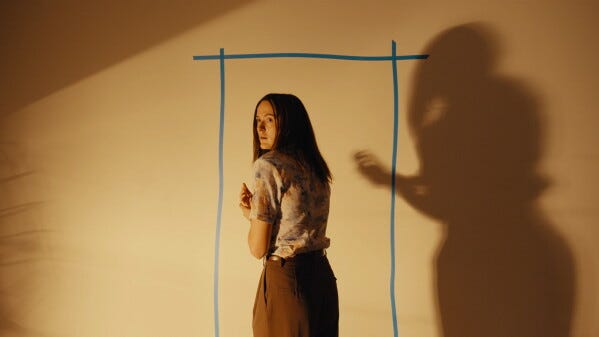
There is no denying that Parsons has a talent for being behind the camera. Simply put, this film is stunning. Part of this is because almost everything is practical. For this film, a 30,000-square-foot practical set of the backrooms was made, leaving space for realism to come alive on set. The found footage aspect of this film, along with the vast yellow rooms, really give this sense of dread that’s covered in mundane.
What is mundane in this film is unfortunately its story. Told from the perspective of two characters, the film tries to give us a character-focused narrative but pulls back to give more room for the backrooms. The biggest issue in the film is having two different points of view for each character, telling us two separate stories at once. For the first half, we followed Clark as we witness his descent into the backrooms while we follow Mary in the second half.
The script begins to unravel once the two characters’ storylines are woven into each other’s perspective. What starts as two cleanly divided narratives loses its footing the moment the film attempts to merge them. Clark’s descent and Mary’s parallel journey, though compelling on their own, become muddled when filtered through the other’s lens. The audience is left disoriented — not in the atmospheric, intentional way the backrooms demand, but in a way that feels like a structural misstep.
The interweaving creates more confusion than tension, ultimately undermining the emotional investment the first half worked so hard to build. Some might say the entire point of the Backrooms is to confuse you but leave the confusion to the backrooms, not the characters.
Audio: What You Hear Is What You Fear.
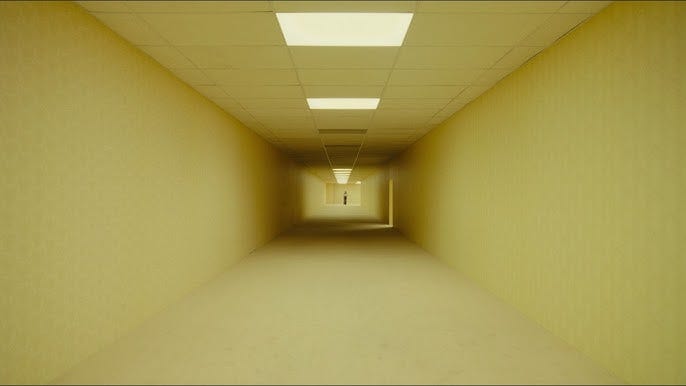
It is easy to argue that the most important part of a horror film is the audio. I think it is more important in a film like Backrooms in particular due to the liminal space the film is working with. The audio in this film is masterful – from small sounds to transitions serving the visuals in the best way possible. The backrooms, by nature, are defined by silence broken only by the oppressive buzz of fluorescent lighting and the soft, unsettling muffle of carpet underfoot.
The sound design here captures that unease with the utmost precision. There is never a moment where the audio feels out of place — instead, it functions as an element of horror. Each muddled footstep stomping against the carpet as our characters traverse the never-ending halls creates a sense that something out of frame is coming to ruin the fun. Where the narrative stumbles, the sound design never does — and in a film built on emptiness, that distinction matters more than it would anywhere else. The feeling that something is following you stays with you the entire time in the backrooms, whether it is subtle or in your face!
Is it worth it?
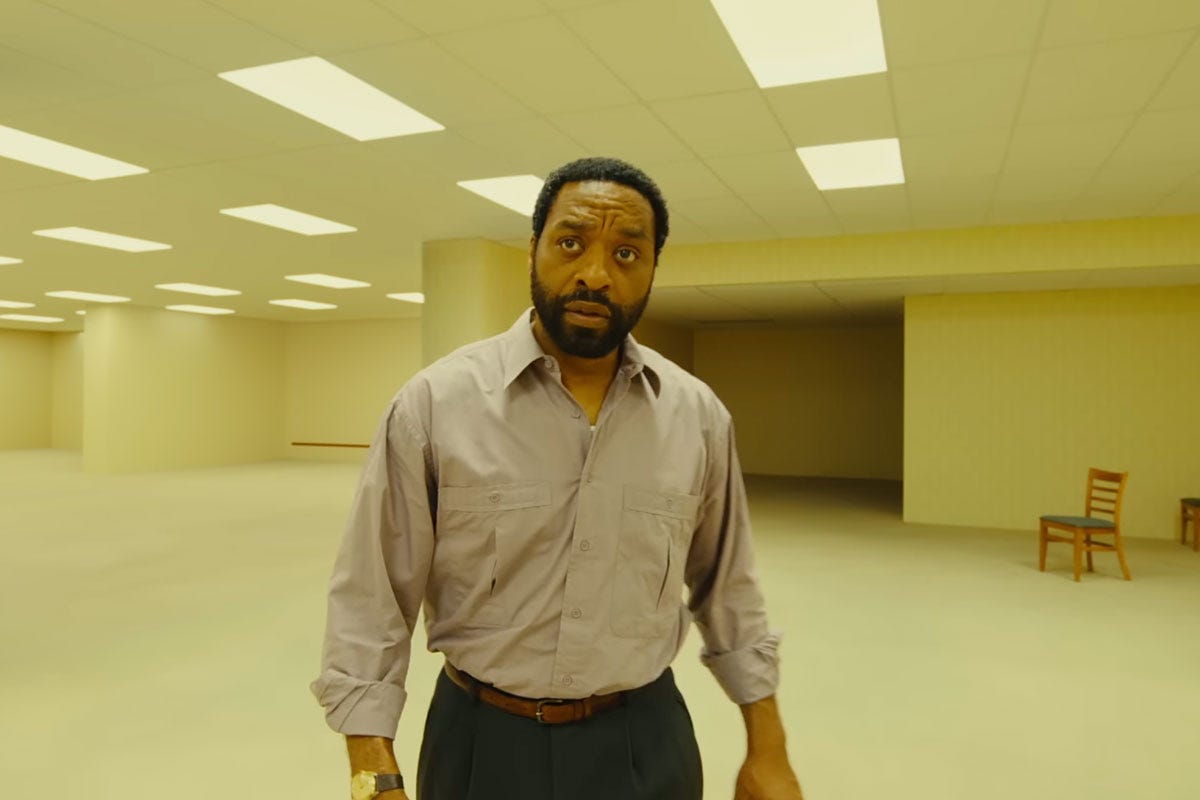
Unfortunately, this movie might be for hardcore fans only. There are shining moments with Clark that may get you fully invested in what is going on, but that is undone once Mary takes over. There is just not enough for her character to feel relevant to the story. She simply serves as the character used to lore-dump onto you. Parsons clearly has a bright future, especially at his young age – but his career might only worth following once we see what he can do without a vast crew of producers inputting their creative ideology into his work.
Backrooms is now playing in theaters worldwide.